
The EU Packaging and Packaging Waste Regulation generally applies from 12 August 2026, while important obligations follow different schedules. Cosmetic brands should map each requirement to their packaging, market and role, then request component-level evidence from suppliers rather than treating one generic certificate as proof of compliance.
The practical difference is worth understanding before you brief your next packaging project. A directive left each Member State room to implement rules its own way, which is why labelling and take-back systems differed from country to country. A regulation applies the same way everywhere, with no national transposition.
For beauty brands, PPWR cosmetic packaging rules cover the whole pack: the primary container (tube, jar, compact, pump), the secondary carton, and the labelling and documentation that go with them.
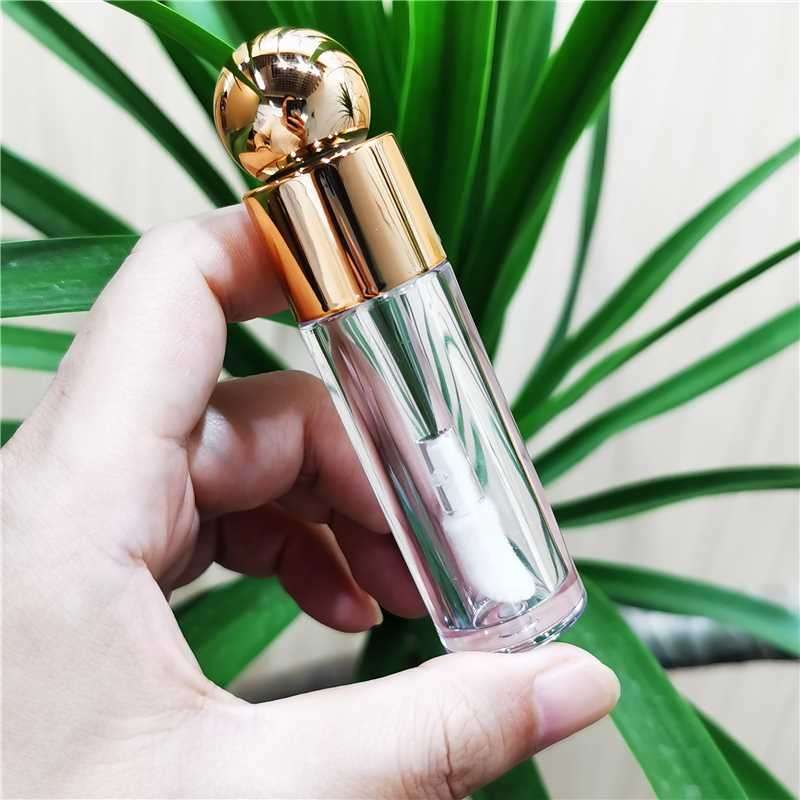
Which PPWR requirements apply now, and which apply later?
Not every obligation starts on the same date, and vendors who tell you “everything changes in August 2026” are simplifying.
Binding now: the framework itself — scope, definitions, substance restrictions, and documentation duties.
Phased in later: the detailed design-for-recycling criteria and grades, minimum recycled-content targets, Article 10 packaging-minimisation requirements, and the harmonised material labels. Those arrive through delegated and implementing acts over the following years.
Two consequences follow from that split:
- You are not required to complete a full PPWR recyclability conformity assessment yet. The Commission’s guidance states that the complete assessment is not required until the relevant delegated acts enter into force, and that manufacturers should continue to address the transitional requirements and relevant harmonised standards in the meantime.
- You should still not wait. Tooling changes, formula compatibility testing, stability testing and supplier qualification routinely take longer than one product development cycle. A brand that starts redesigning in 2030 will be sourcing against a deadline it cannot move.
What does PPWR mean for cosmetic packaging buyers?
Design for recycling
All packaging placed on the EU market is intended to be recyclable in an economically viable way by 2030. Under the regulation’s performance grades for PPWR cosmetic packaging:
| Grade | Recyclability performance |
|---|---|
| Grade A | At least 95% |
| Grade B | At least 80% |
| Grade C | At least 70% |
| Below Grade C | Under 70% |
Packaging is generally required to achieve Grade A, B or C from 1 January 2030, or 24 months after the relevant delegated acts enter into force, whichever is later. From 1 January 2038, Grade C is no longer sufficient — packaging will generally need Grade A or B.
In cosmetics, the components that draw attention are predictable: airless pump assemblies, metal springs inside caps, multi-material closures, metallised decoration, opaque plastics, and full-body shrink sleeves. None of these are banned today. They are simply the parts most likely to need redesign, and the parts most likely to be asked about.
Packaging minimisation
Article 10 addresses packaging that increases the perceived volume of a product. The Commission’s own FAQ uses a cosmetic example: a 50 ml jar of face cream must be reduced to the minimum volume needed to protect its contents, and features such as double walls, false bottoms, or an outer carton that makes the product look larger than it is need to be justified with test evidence — not design preference.
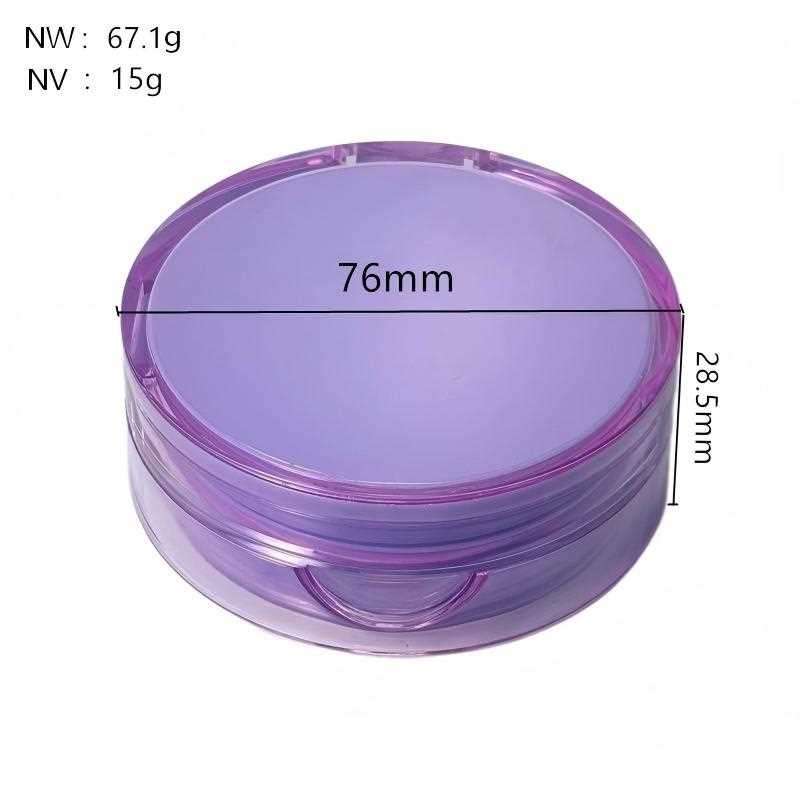
Packaging cannot exceed a maximum 50% empty space under specified conditions, and the requirements for sales packaging empty space are scheduled earlier than the general Article 10 date. Oversized gift boxes and double-walled compacts are the obvious review candidates.
Recycled content
Plastic packaging will need a minimum share of post-consumer recycled material, with the first major threshold in 2030 and a higher one in 2040. At the 2040 stage, contact-sensitive PET is expected to reach 50% recycled content, with other contact-sensitive plastics at 25%. For premium lines, the harder problem is usually not sourcing PCR but keeping the finish, clarity and colour consistency your brand has already approved.
Labelling
A harmonised material and sorting label is coming, applying from 12 August 2028, or 24 months after the relevant implementing act enters into force, whichever is later. The practical work is artwork planning: confirm where a sorting label physically fits on a 4 ml tube or a compact base before final artwork is locked.
Responsibility and documentation
PPWR builds on national Extended Producer Responsibility schemes rather than replacing them. If you place packaging on the market in a Member State, you register and report there — on packaging type, weight, recyclability and recycled content. The reporting categories may change even where your existing registration does not.
One point worth stating plainly: a supplier declaration does not transfer your legal responsibility. It can form part of your technical documentation, but it does not replace assessment of the finished packaging configuration.
Format by format: where the PPWR risk usually sits
Use this as a PPWR cosmetic packaging component-mapping checklist. The right-hand column is what a brand should be able to obtain from its packaging supplier.
| Pack format | Components to map | Where the PPWR risk usually sits | Evidence to request from your supplier |
|---|---|---|---|
| Lip gloss tube (e.g. 4–10 ml) | Tube body, cap, inner plug/wiper, applicator, decoration, seal | Mixed materials (PETG/ABS/PP), metallised caps, label coverage, small-format sorting | Material breakdown by component, component weights, decoration method, recyclability basis |
| Lipstick / bullet case | Outer case, inner cup, mechanism, sleeve, decoration | Metal mechanism inside plastic case, inseparable parts, weight | Component separation test, material list, recycled-content data |
| Cushion compact (13 g / 15 g) | Case, base, mirror, puff, inner tray, sponge, seal | Mirror and sponge as separate non-packaging items, multi-material case, refill design | Bill of materials, refill compatibility, justification for added volume |
| Loose powder box | Base, lid, sifter or mesh, seal, decoration | Sifter mesh as a second material, over-sized base for shelf presence | Sifter material spec, volume vs fill weight, empty-space measurement |
| Airless pump / foundation bottle | Actuator, housing, spring, ball, gasket, dip tube, bottle, overcap | Multiple polymers, metal spring, elastomer gaskets, separability | Full component list with materials and weights, separation guidance |
| Squeeze tube | Tube wall, barrier layer, shoulder, cap, print, foil seal | Mixed-material laminate, barrier requirements vs recyclability | Structure breakdown (e.g. ABL/PBL), barrier spec, alternative mono-material options |
| Jar / cream pot (e.g. 50 ml) | Jar, lid, liner, inner disc, seal, spatula | Dissimilar materials, separate accessories (spatula = non-packaging item), false-bottom volume | Volume justification, liner material, accessory status |
| Eye / mascara component | Bottle, wiper, stem, brush, cap, decoration | Wiper and brush as mixed materials, small format, separation | Component list, material identification, separation notes |
| Sachet / sample pack | Print layer, barrier, sealant, foil, ink, adhesive | Multilayer construction, small format, sorting limitations | Laminate structure, sealant material, recyclability basis |
| Gift set / secondary carton | Box, tray, insert, sleeve, magnet, window, adhesive | Empty space, unnecessary layers, mixed materials, magnet contamination | Empty-space ratio, layer count, material separation plan |
| Refill system | Durable pack, pod, pouch, closure, label | Reuse claims, refill pack recyclability, system operation | Refill pack material data, reuse documentation, durability evidence |
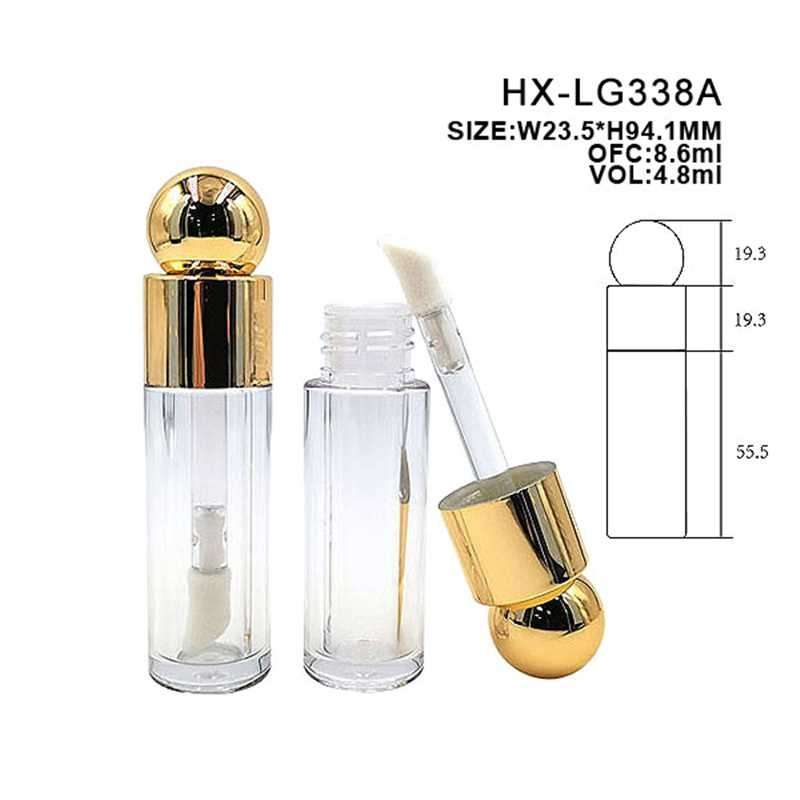
For a format-by-format view of the most common lip component, see our guide to lip gloss tube sizes.
What to ask your supplier — a working checklist
- A component-level bill of materials with materials, weights and separation guidance — not a summary line saying “recyclable”.
- Decoration and finishing methods (silk screen, hot stamping, UV coating, spraying, metallising) and how each affects recyclability.
- Recycled-content data by component and production site, with the calculation basis stated.
- Heavy-metal compliance and test reports for the packaging as placed on the market.
- Volume justification for compacts, jars and cartons: fill weight versus total pack volume, so Article 10 arguments can be documented rather than asserted.
- A refill or mono-material alternative for any format flagged as high risk — quoted side by side, so redesign can be planned rather than improvised.
- Written confirmation of who holds which role in your supply chain, since the “manufacturer” and “producer” obligations under PPWR are assessed separately.
How Fengyuanbeauty can help
We supply empty cosmetic packaging components — lip, face, eye and squeeze-tube formats — and we are used to being asked for documentation rather than reassurance. If you are mapping an existing range against PPWR cosmetic packaging requirements, we can provide, per item:
- component-level material and weight data;
- decoration and finishing specifications, with recyclability notes;
- alternative structures for flagged formats (mono-material or refill routes) quoted for comparison;
- physical samples so your team can run compatibility, stability and drop testing on the actual pack.

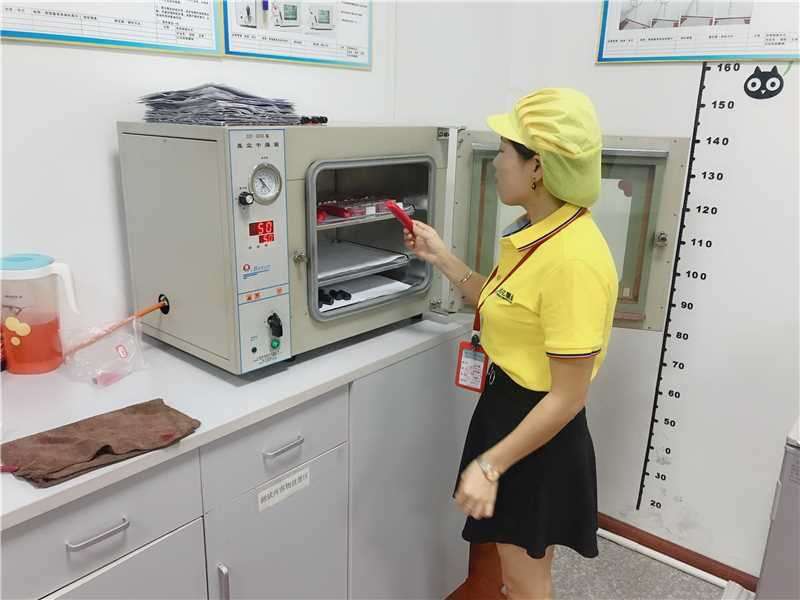
You can request samples through our Get Sample page, see how we control each batch under Quality Control, or read about our tooling and development process in OEM & ODM Solution. For a specific component question, contact us and tell us your format and target market. You can also read more about us, browse our product catalogue, check the FAQ, or follow the blog for new format guides.
Browse our components by category: Lip Package · Face Package · Eye Package · Squeeze Tube Package.
This article is general information for packaging planning, not legal advice. Regulation (EU) 2025/40 is being phased in through delegated and implementing acts; always check the current text and the European Commission’s PPWR guidance for your specific packaging.
PPWR cosmetic packaging FAQ
Does PPWR apply to my brand if we are based outside the EU?
Yes. PPWR applies to packaging placed on the EU market regardless of material or the country in which the brand is established. If your products are sold into the EU, the obligations follow the packaging — the location of your company does not exempt it.
Does the August 2026 date mean I must change my packaging now?
The general application date brings in the framework, scope, definitions, substance restrictions and documentation duties. Detailed design-for-recycling grades, recycled-content targets, Article 10 minimisation requirements and the harmonised labels have later application dates. That said, the Commission’s guidance expects manufacturers to keep addressing the transitional requirements and relevant standards — so packaging decisions made today should already consider them.
Will airless pumps be banned?
There is no general ban on airless pumps. The issue is recyclability performance: assemblies that combine multiple polymers, a metal spring and elastomer gaskets are among the formats most likely to need redesign to reach a compliant grade by the 2030 stage. Asking your supplier for a component-level breakdown early is the practical first step.
What is the “below Grade C” rule?
Packaging is generally required to achieve Grade A, B or C — at least 95%, 80% and 70% recyclability performance respectively — from 1 January 2030 or 24 months after the relevant delegated acts enter into force, whichever is later. Higher standards follow: from 1 January 2038, Grade C is no longer sufficient and packaging will generally need Grade A or B.
Is a supplier declaration enough to demonstrate compliance?
No. A declaration can form part of your technical documentation, but it does not transfer legal responsibility, and it does not replace assessment of the finished packaging configuration as placed on the market.
Sources
- European Commission — Packaging waste (Regulation (EU) 2025/40; in force 11 February 2025, application date 12 August 2026): environment.ec.europa.eu
- European Commission — PPWR FAQ and guidance for economic operators (March 2026; updated August 2026): environment.ec.europa.eu
- Regulation (EU) 2025/40 (full text): eur-lex.europa.eu
- EuVerify — PPWR and Cosmetic Packaging: euverify.com
- Regsurance — PPWR for Cosmetic Brands: 2026 Compliance Guide: regsurance.com
Which official source should buyers use for application dates?
The European Commission packaging-waste page identifies the general application date and links the regulation and implementation guidance. Check the provision-specific timetable instead of treating every obligation as effective on one date.
What is the next step for your packaging project?
Browse the relevant packaging collection, review customization options, and request a model-specific sample. Send the model reference, intended formula or format, quantity and any open questions so the response can address your actual order.
Publisher: Fengyuan · Existing article credit: Fengyuanbeauty · Content updated 18 November 2026. Product and company details should be checked against the company profile and current written specification; sample checks are project-specific.