
To distinguish a cosmetic packaging factory from a trading company, ask who controls drawings, tooling, sampling, production and inspection, and request evidence that relates to your order. A showroom, low quotation or company label alone does not establish which operations a supplier performs directly.
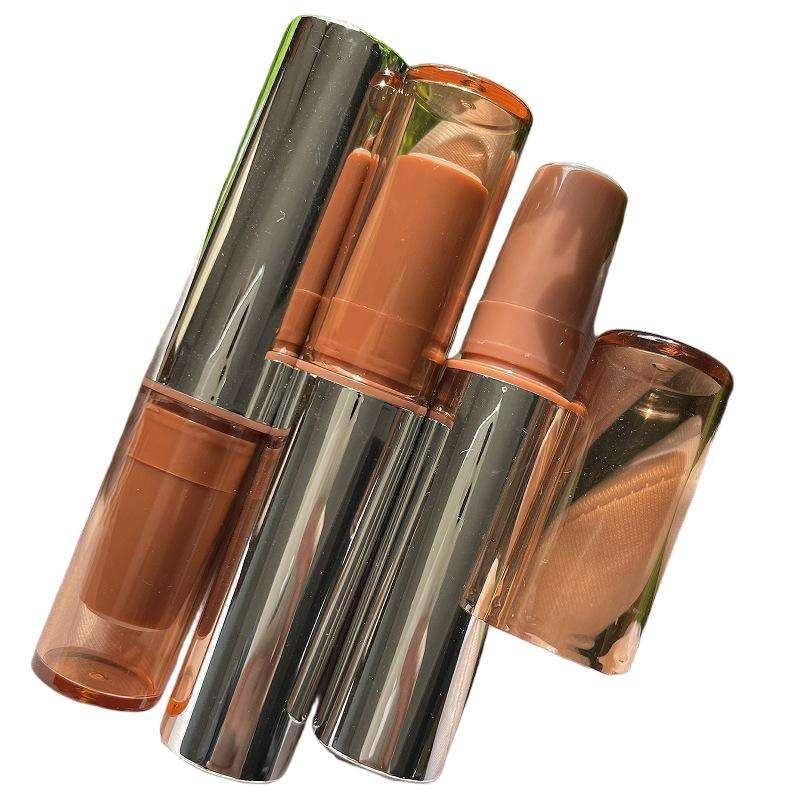
The good news is that telling a cosmetic packaging factory from a trading company is easy to verify. A factory that actually makes the part has knowledge a middleman cannot fake on demand: how the mould is built, who cuts the sample, who stands next to the production line, and which exact material grade sits behind the test report. This article lists the questions, the answers each type gives, and what to do when the answers go thin. If you are evaluating several suppliers for an OEM or ODM project, work through the list before you send artwork. The same questions work for lip packaging, face makeup packaging or squeeze tubes, because the underlying cost structure is the same.
Who controls the mold, drawing and production records?
For any custom cosmetic packaging part, the mould is where the real commitment lives. It is the one asset that cannot be faked with a showroom. Ask directly: who owns and maintains the tooling for this part, and who made it? A factory that makes the part answers in concrete terms: the steel, the cavity count, the parting line, where the gate sits, what the mould cost, and what happens if a cavity needs rework mid-run. A trading company can describe the part perfectly well. It gets vague the moment the question moves to the tool that makes the part.
Follow up with two questions that narrow the field further:
- “Do you make new moulds in your own workshop, or is tooling subcontracted?” A source that owns tooling capacity can answer both the cost and the lead time of a new mould from experience, not from a supplier’s quote forwarded to you.
- “If we change the wall thickness or add a rib, what changes on the mould side?” The correct answer mentions rework scope and timeline. The trading-company answer is a restatement of the change you just described.
Ownership of the mould is the first filter, but it only tells you where the tool is. The rest of the article checks who operates it, who inspects it, and who is actually liable for the part that arrives at your dock.
Who prepares and approves the packaging sample?
Sampling is the second place the structure of a supplier shows itself, because a factory’s sample process is a short, specific chain while a middleman’s is a relay race you cannot see. Ask:
- Who exactly makes the sample: which station, which machine, and how many days from the approved file to the sample on the table?
- What file formats you send and what they become: a 3D drawing for the mould or a printing screen for your approval before production.
- What a custom colour or printing sample costs, and under what condition the fee is refunded.
A factory answers with a timeline and a number: files in JPG, AI, CDR or PDF, a 3D drawing for the mould, a trial sample moulded and compared against your reference before the colour is approved. A trading company’s answer usually stops at “our factory will make it”, which is technically true and operationally useless. The follow-up question that separates the two is simple: send me the 3D drawing and tell me the resin grade this sample is made from. The source does that without hesitation. The middleman asks you to wait.
One detail matters more than it looks: the sample’s material. For a lip gloss tube, a clear AS or PETG body with an ABS cap is a specific pairing chosen for clarity, rigidity and how the decoration takes. If the sample is the wrong resin, the finish, the seal and even the shade behaviour in the final product will be wrong in ways you only discover at volume.
Who does quality control, and where
Ask how QC is organised and the structure announces itself. The questions that matter:
- How many inspectors are on the team, and is inspection a dedicated station or part of a packing task?
- What percentage of each batch is inspected before shipment, and which checks are on the list?
- Where is the final check performed, physically: on the same site as the machine, or somewhere else entirely?
A factory with a real QC function answers with a process: inspection of seal integrity, thread fit, print adhesion and shade comparison against the signed sample, with the specific inspection standard and acceptance level agreed in the specification. A trading company cannot staff that process, so its answer drifts to “we check the goods before shipment” with no station, no checklist, no standard. The telling follow-up is where does your final inspection happen relative to the machine that made the part? A factory’s inspectors stand next to the production line. A trading company’s inspection happens on another continent, and its “QC” is the factory’s QC forwarded as PDFs.
Material test certificates: who can actually provide them
Every supplier will say it can provide FDA food-contact test reports, EU 10/2011 test reports and REACH statements. The difference shows up in the specifics. Ask for the report for the exact resin grade used in your part, and watch what happens next.
A factory can tell you which grades it runs, what each report covers, and the scope of each test. It can align the material declaration with your specification before production, so the documents that ship with the goods describe the goods. A trading company either sends a report you cannot tie to a specific part, or promises to ask the factory later. The question that exposes the gap: can you provide the material test certificates for this part number, in this material, before shipment, referenced to the batch being produced? The source says yes with details. The middleman says yes with promises.
If a project calls for recycled material or a certified supply chain, request the applicable certificate and transaction evidence, identify the holder and scope, and confirm that the proposed component and order are covered. Do not infer certification from a logo, a resin name or a general company statement.
Production capacity: the question that filters the vague answers
Capacity questions are the most misused in supplier audits, because both a factory and a trading company can quote impressive numbers. The fix is to ask for capacity in machine terms, not in marketing terms.
- For a 10,000-piece run on one model, how long is the production window, and is it running in parallel with other orders?
- How many shifts does the machine run, and what is the typical output per shift for this part family?
- What does the factory’s schedule look like when your order lands: is there a queue in front of it, and what determines your slot?
A factory answers in hours, cavities and shift patterns, and can tell you why a particular order takes the time it takes. A trading company answers in the range the factory gave it, minus the reasons, and its numbers tend to be identical across part families, which is itself a signal. The standard shape at a direct factory is custom sampling in about 7 days and production of a confirmed order in typically 25 to 35 days. If you get a different shape, ask for the reasoning, and notice whether the reasoning is about machines or about “our partner”.
What to do when the answers go thin
When a supplier’s answers get vague at the mould, the sampling station or the inspection checklist, do not take it as rudeness. Take it as information: you are talking to someone whose knowledge stops at the factory gate. The practical moves, in order:
- Request a live video call of the production floor, specifically the machine running your part. Not stock footage, not a showroom. A source shows the part on the machine in real time without difficulty; a middleman cannot, because the part is not on any machine it controls.
- Ask for one sample made to a small design change on your file. The speed and correctness of the result tells you who is holding the tooling and the resin lot.
- Put the documentation requirement in the RFQ: which parts, which materials, which reports, referenced to which batch. How the supplier handles that sentence in the first reply tells you more than any factory tour.
None of this requires the supplier to hand you its books. It only requires it to answer operational questions from experience, and that is the line between a factory and a trading company.
How Fengyuanbeauty approaches this
Confirm sample availability, charges, dispatch timing, production lead time, payment and inspection scope in the current written quotation. These depend on the model, customization, quantity and destination. Keep the approved sample and final specification with the order records.
Confirm sample availability, charges, dispatch timing, production lead time, payment and inspection scope in the current written quotation. These depend on the model, customization, quantity and destination. Keep the approved sample and final specification with the order records.
Send us the model and the decoration plan to vincentyan@fymakeup.com or WhatsApp +8618638168002 and we will reply within 24 hours (working days, GMT+8). Request free stock samples first, and validate the part before you commit to volume.
Which evidence should support the final packaging decision?
Use the chosen model’s drawing, component list and approved sample as the project record. For the safety-assessment context of packaging in contact with cosmetics, consult the EU guidance on the cosmetic product safety report. This regulatory reference is not a test result or approval for a particular Fengyuan model.
What is the next step for your packaging project?
Browse the relevant packaging collection, review customization options, and request a model-specific sample. Send the model reference, intended formula or format, quantity and any open questions so the response can address your actual order.
Publisher: Fengyuan · Existing article credit: Fengyuanbeauty · Content updated 18 November 2026. Product and company details should be checked against the company profile and current written specification; sample checks are project-specific.