
Before importing cosmetic packaging from China, agree the product specification, shipment documents, delivery terms and destination-market requirements with the supplier and your customs adviser. Check the applicable tariff classification for the actual goods; a previous shipment or an online product description is not enough to establish treatment.
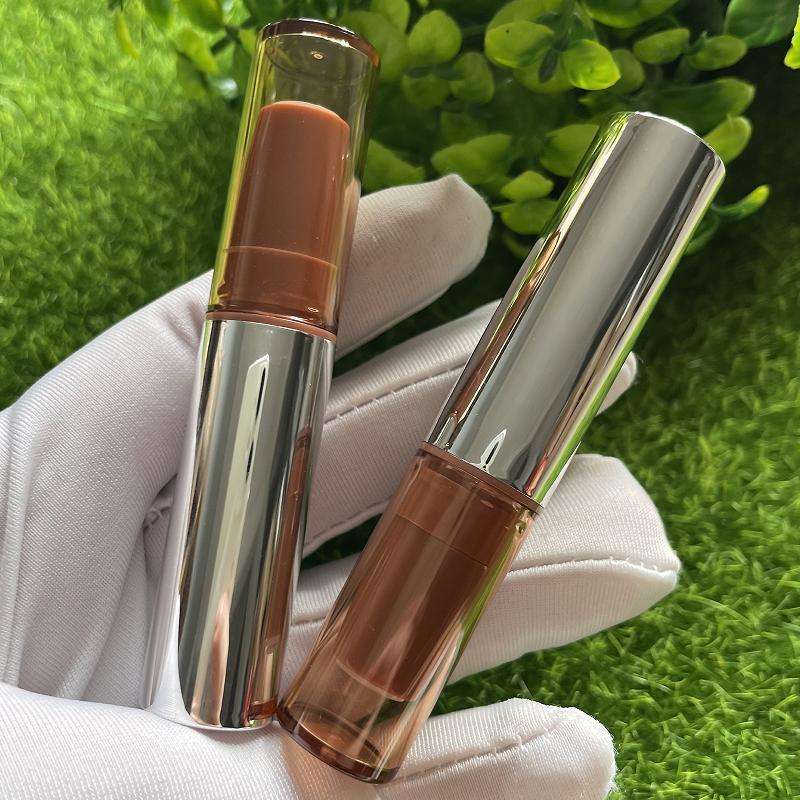
This article is that checklist: the commercial documents, how the HS code and tariff question are actually handled, the inspection list to run before the goods leave, the compliance documents to request before production finishes, and the payment structure that protects your position at the end. Use it at the RFQ stage, not after the deposit is paid. The same list works for lip packaging, eye packaging or squeeze tubes, because customs does not care which part of the face the product is for. If you are setting up the order itself, start from our contact page and send the specification with the RFQ.
Which shipment documents should match the order?
Customs clearance runs on a small set of commercial documents, and the failure mode is never a single missing document. It is documents that do not agree with each other. The standard set:
- Commercial invoice: buyer and seller details, part numbers or model descriptions, quantities, unit prices and total value, declared origin, and the HS code for each line item.
- Packing list: carton count, dimensions and gross and net weight per carton, with the contents matching the commercial invoice line by line.
- Certificate of origin: required by many importing countries and by some trade agreements, issued to support the origin declaration on the invoice.
- Bill of lading: the carrier’s document of shipment, which your broker and your freight forwarder will check against the invoice and packing list before the container is released.
For cosmetic packaging specifically, the invoice description has to match the part exactly: material, capacity, decoration and model number. A container of 5 ml AS lip gloss tubes declared generically as “plastic packaging” is a clearance problem you will solve with the broker, not with the supplier, and it takes days. Ask the factory at the RFQ stage what it declares, and send that description to your broker before the goods are made, so the two sides agree while it is still cheap to change something.
How should buyers verify the tariff classification and rate?
The HS code is the number that decides which tariff line your container falls under. The supplier’s job in this process is to help identify the right code for the part: plastic cosmetic containers have their own lines in the international schedule, typically in the 3923 or 3926 family, and the factory that makes the part usually knows which code it has used before. The final assignment, though, belongs to your broker, because the code determines the rate in your country’s schedule.
Here is the rule to follow: the rate you pay is set by the importing country’s official tariff schedule, and the exact figure should be confirmed by your customs broker. Never take a tariff rate from a supplier, a forwarder or a blog, including one about importing from China, because the number that applies to you depends on your market, the exact HS line, and any trade measures in force at the moment your container clears. Trade measures change more often than tariff books get updated, and a rate quoted at the RFQ stage can differ from the rate at clearance. Check the rate against the importing country’s official tariff schedule and with your customs broker at two points: when you confirm the specification, and again before the container loads.
Do the same for everything that rides on the tariff: import duty, VAT or sales tax on the import, and any packaging-specific requirements your market applies. These are rules of your country, not of China, and the broker is the one party who can tell you all of them for the exact HS code. Get the landed cost into your target price before you agree a unit price with the factory, because a tariff surprise after production is a margin problem you cannot renegotiate.
The inspection checklist to run before the goods ship
The inspection question for cosmetic packaging is not “are the parts pretty”. It is whether the part will hold the formula, look right on the shelf and survive the carton stack. Run the checklist below at pre-shipment, before the container is booked, not after it is on the water.
- Seal integrity: the number one failure for tubes and bottles that hold liquid formula. A lip gloss tube or a squeeze tube that passes visually and leaks in transit has failed at the seal, which is a structure question: the inner stopper or gasket at the nozzle, and the cap tightened against it in assembly. Spot-check by opening, and if you have the formula, by a short shake-and-inspect under pressure.
- Thread fit: caps should seat with a consistent feel, neither sloppy nor forcing. Thread problems surface as leakage in transit and as consumer complaints later, and they are caused at the mould and assembly stage, where only pre-shipment inspection can still catch them.
- Print adhesion and registration: check the decoration against the approved sample. Small text and shade numbers on a narrow tube are exactly where silk-screen registration fails quietly, and where a print that looks fine on the first carton is off on the fifteenth.
- Shade comparison against the signed sample: resin colour shifts with lighting and wall thickness, so compare under a controlled light source, the same one you approved the sample under. If the shade was matched to a Pantone reference or a physical sample at sampling, that is the standard you are checking against now.
- Dimensional spot checks against the specification: capacity, body diameter, overall height. A few millimetres out is enough to change the fill weight, the shelf fit or the carton count.
- Carton level: carton count, per-carton quantity, labels, and gross weight against the packing list you will send to customs. Mismatches here become document problems at the port, which is the failure mode this article is about.
On a first container or a new model, an independent pre-shipment inspection by a third party is worth the fee. The reason is not that you distrust the factory. It is that an independent report turns a quality conversation into a document the factory must respond to before the container loads. If the factory is confident in its own inspection, it will not object to the visit.
Compliance documents: request them before production, not after shipment
If your market requires documentation for the plastic parts in contact with the formula, the reports to ask for are the FDA food-contact test reports, the EU 10/2011 test reports and the REACH statement, provided by the factory on request. Two rules keep this from becoming a post-shipment problem.
First, the documents have to be tied to the parts you are actually importing. Ask for the report per part and per material grade, and confirm the scope matches the specification you signed. A generic statement that does not name the material and the test is a placeholder, not a document, and your compliance file will not accept it either. If you are specifying recycled ABS, PP or PETG, the corresponding RCS, GRS or ISCC certification for that material comes in the same package (see our PPWR packaging guide).
Second, the timing: request the documentation set at the RFQ stage, confirm it covers the specification, and make sure it is generated before production finishes, not after the container ships. A supplier that can only provide the reports after the goods are on the water has not solved your compliance problem, because the file needs to be complete before the product reaches your market. See how to read each report, including the fields to check and the common concept swaps, in our guide to FDA, EU 10/2011 and REACH reports.
Payment structure and how it protects you
Confirm sample availability, charges, dispatch timing, production lead time, payment and inspection scope in the current written quotation. These depend on the model, customization, quantity and destination. Keep the approved sample and final specification with the order records.
The sequence for importing cosmetic packaging, end to end
Put the pieces together and the first order follows one sequence, and deviating from it is where the problems come from:
- Specification confirmed in writing, with the signed sample as the standard for shade, print and fit.
- HS code proposed by the factory and confirmed with your broker; duty, VAT and packaging requirements confirmed against the importing country’s official tariff schedule.
- 30% deposit paid; production starts, typically running 25 to 35 days.
- Pre-shipment inspection run against the checklist, with the report reviewed before the container is booked.
- Balance settled; goods shipped by FEDEX, UPS, TNT or DHL for sample and courier quantities, or by sea or air freight for container volumes.
- Commercial documents, packing list and compliance reports delivered together, consistent with each other and with the invoice description.
The whole sequence fits in the sample-to-shipment window of a normal production order, which is the point: nothing in it requires the supplier to do anything outside a standard run. It requires you to ask for it in the right order.
How Fengyuanbeauty approaches this
Confirm sample availability, charges, dispatch timing, production lead time, payment and inspection scope in the current written quotation. These depend on the model, customization, quantity and destination. Keep the approved sample and final specification with the order records.
Send the specification to vincentyan@fymakeup.com or WhatsApp +8618638168002 and we will reply within 24 hours (working days, GMT+8). Start with free stock samples so you can inspect the part before you book the container.
Where can buyers check the supplier and inspection process?
Review the company profile and quality-control information alongside your own project documents.
What is the next step for your packaging project?
Browse the relevant packaging collection, review customization options, and request a model-specific sample. Send the model reference, intended formula or format, quantity and any open questions so the response can address your actual order.
Publisher: Fengyuan · Existing article credit: Fengyuanbeauty · Content updated 18 November 2026. Product and company details should be checked against the company profile and current written specification; sample checks are project-specific.