
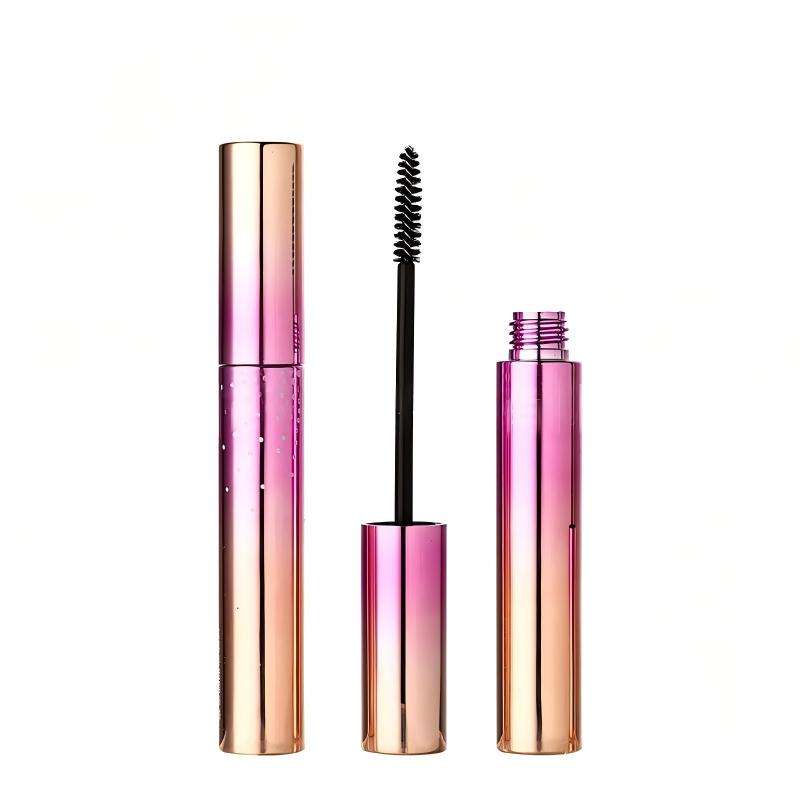
Choose eye makeup packaging by the formula, application method and required applicator or pan arrangement. Mascara, eyeliner, brow products and eyeshadow use different assemblies. Confirm the chosen container, closure, dispensing or pickup behavior and filling requirements with a model-specific sample.
Which eye formula and application method are you packaging?
Begin with the formula type and how the customer applies it. A mascara or brow gel commonly needs a tube, wiper and brush or comb. A liquid eyeliner needs a container and an applicator tip suited to the intended line and formula. A pencil product needs a barrel and cap configuration that protects the point. An eyeshadow product may need a compact or palette with pans, a closure and, if required, a mirror or applicator space.
These are starting points, not universal specifications. Share the actual formula characteristics, application expectations and filling process with the supplier. Ask what information is needed to assess the selected model with your product.
Which container and applicator components need approval?
Mascara and brow gel tubes
Review the tube, cap, stem, wiper and brush together. The brush shape and wiper opening affect how product is picked up and returned to the container. Tell the supplier what application experience you want and provide a reference image or sample when possible. Confirm which brush and wiper combinations are available for the tube model.
Liquid eyeliner containers
Clarify whether the product uses a brush, felt tip or another applicator style. Check the cap connection, applicator length and container format as one assembly. If the formula has particular flow or drying characteristics, discuss how those should be evaluated during sample testing.
Eyebrow pencils and other pencil packs
Identify whether the product is a wood pencil, a mechanical pencil or a different format, and whether a sharpener, spoolie or protective cap is required. Check that the cap stays in place in normal handling and that the point is protected during packing and transit. Confirm the actual fill or product size and outer dimensions for the selected model.
Eyeshadow cases and palettes
Decide the pan count and layout, case footprint, closure, mirror and any applicator space. Confirm the pan dimensions and attachment method, then review the case with the intended product configuration. For custom palettes, supply a clear layout or reference and ask for a drawing before decoration begins.
Ask about compatibility and use testing
For liquid and cream formulas, ask what compatibility review is appropriate for the formula and the materials that contact it. For tubes, request evaluation of the container, wiper, stem, brush and cap as a complete set. For palettes and pencils, focus on fit, closure, product protection and the intended user interaction. Agree on sample quantities, test conditions, responsibilities and acceptance criteria with your supplier and qualified product team.
A visual sample can confirm appearance and basic operation, but it cannot by itself establish long-term compatibility, stability or compliance. Those conclusions depend on the formula, packaging materials, test plan and market requirements.
Review dimensions and decoration details
Request a drawing for the exact package model and confirm which measurements are critical to fit or filling. Separate the target product quantity from external dimensions. For decoration, define the logo artwork, print area, color reference, finish and any surface that should remain unprinted. Review a decorated sample or production proof when color and placement matter to brand approval.
Our eye packaging sizes guide provides a useful starting point for comparing formats. Use it to shortlist options, then confirm the selected model and applicator combination for your project.
Use a sample approval checklist
- Confirm the package model, material, color and component list match the brief.
- Test the applicator with the intended formula and observe pickup, application and return to pack.
- Check that the wiper, stem, brush, cap and container fit and operate as intended.
- Review the closure and protection during normal handling and packing.
- Inspect artwork placement, print quality and surface finish against the approved reference.
- Keep a signed-off sample or documented reference for later production checks.
Send a complete RFQ
Include product category, formula context you can share, target fill quantity, preferred applicator, package reference, decoration, estimated quantity, destination market and target schedule. Attach labelled images or drawings, and ask the supplier to identify any assumptions in its quotation. This makes it easier to compare proposals on the same scope.
Explore eye packaging formats or contact Fengyuan to discuss model availability, samples and project requirements.
Eye makeup packaging buying checklist
Before ordering, confirm that the package matches the formula and application method, the applicator is evaluated with the intended product, all components fit as an assembly, decoration is approved, and the sample reference and acceptance criteria are recorded. A clear decision trail helps your team and supplier work from the same requirements through production.
Which evidence should support the final packaging decision?
Use the chosen model’s drawing, component list and approved sample as the project record. For the safety-assessment context of packaging in contact with cosmetics, consult the EU guidance on the cosmetic product safety report. This regulatory reference is not a test result or approval for a particular Fengyuan model.
What is the next step for your packaging project?
Browse the relevant packaging collection, review customization options, and request a model-specific sample. Send the model reference, intended formula or format, quantity and any open questions so the response can address your actual order.
Publisher: Fengyuan · Existing article credit: Fengyuanbeauty · Content updated 18 November 2026. Product and company details should be checked against the company profile and current written specification; sample checks are project-specific.