
Choose cosmetic packaging decoration by the component material, surface shape, artwork, color count and required finish. Ask which processes are available for the selected model, approve a decorated sample, and agree how appearance and adhesion will be checked rather than specifying a process name without its artwork and substrate.
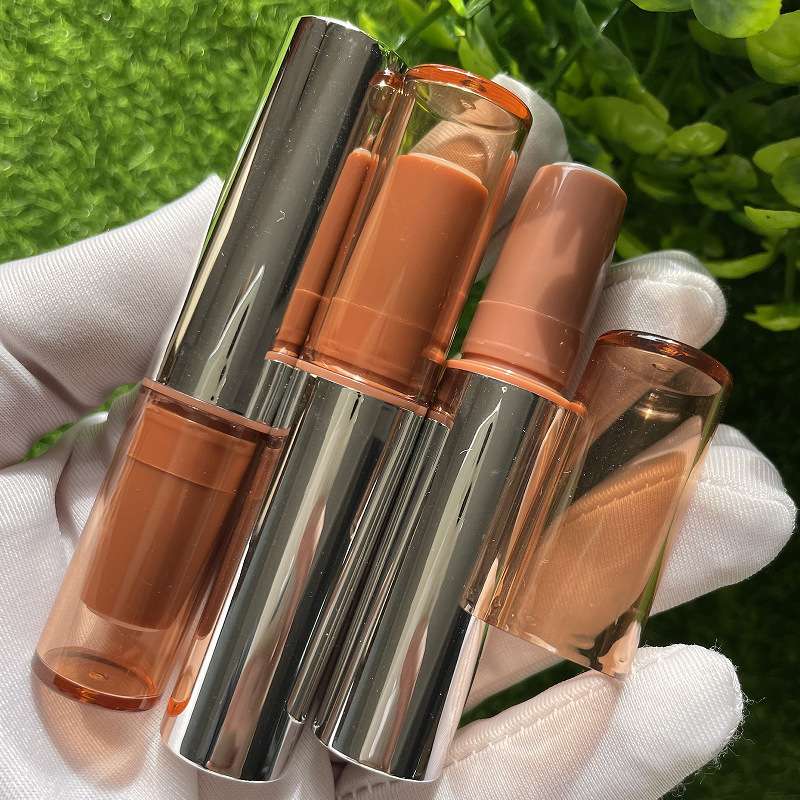
This post walks through the finishes most cosmetic packaging decoration quotes are built from — silk screen, pad and offset printing, hot stamping, UV printing, plus the resin-side finishes of pearl, metallic and gradient masterbatch, and the part-level finishes of electroplating, lamination and 3D embossing — and gives the decision criteria: artwork size, color count, surface geometry, batch size and scratch-resistance requirement. Those five axes decide most of the cost difference between processes, and the last section shows where the difference actually sits in the quote.
Which questions determine the appropriate decoration process?
Before comparing prices, answer these five. Four out of five wrong answers will cost more than the process itself:
- Artwork size. A logo and a text line, or a full-bleed pattern? Small marks go to screen and pad; full-color fields go to UV or offset.
- Color count. One or two colors, a metallic, or the full spectrum? Each extra color in screen printing is a separate screen, setup and pass; foil is one metallic per stamp; UV carries the full range in one pass.
- Surface geometry. Flat, gently curved, or a real 3D shape? Hot stamping needs a simpler shape; pad printing exists for the curved and the irregular; the complicated 3D surface is often best served by color in the resin itself.
- Batch size. Setups — screens, stamps, plates, mold cavities — are fixed costs per run, amortized across the batch. The same process is cheap at volume and expensive on a small first run, and every process added to a design adds a setup.
- Scratch-resistance requirement. A lip product lives in a pocket and in a hand, every day. Surface art — ink, foil, print — wears; color in the resin does not. The durability spec decides whether the finish is a surface or the material.
How should printing methods be compared on the selected component?
Silk-screen printing is the default for logos, text and shade numbers. On a 16–22 mm tube body it is the most legible option for small text, because the ink sits on the surface in a solid, opaque layer — the reason it is the standard on lip gloss and eyeliner bodies in lip packaging. It is also the process where color count is the cost driver: each color is a separate screen, a separate setup and a separate pass, so a one-color logo is cheap and a three-color artwork is three times the setup.
Pad printing exists for the surfaces a screen cannot reach — curved, tapered, concave or irregular shapes — where a soft silicone pad transfers the image onto the part. Offset printing is the large-flat-surface workhorse, used where the print area is bigger than a screen pass makes economic sense and where a high color count has to stay cheap per piece. The practical split: small mark on a straight tube — silk screen; the same mark on a curved or irregular part — pad; a large, multi-color field — offset or UV.
Hot stamping: the premium metal read, and what it gives up
Hot stamping presses a heated die against the part with foil between them, and the result — gold, silver, rose gold — reads as metal in a way that printed ink never does. That is why it is the default for the logo on a premium compact lid or a cap. What it gives up is scope. The foil follows the die, so the shape has to be simple and the color is limited to the foil stock; a busy, multi-color artwork is the wrong job for it. On a curved or textured surface the foil does not lay flat, and the edges of the foil are the first thing to lift under daily abrasion. The rule of thumb: hot stamp a logo, not a picture.
UV and offset: full-color and large areas
UV printing cures the ink with ultraviolet light as it is laid down, which is what lets it carry a full-color, photographic artwork in a single pass — the reason a full-bleed pattern on a compact lid is usually quoted as UV rather than screen. The trade is scale: UV is the right route for large areas and complex art, and the wrong route for a two-millimeter shade number, where silk screen reads better and costs less. On clear and translucent bodies, the UV layer also doubles as the protective coat, which matters for the scratch question in the last section.
Electroplating, embossing, lamination and the resin finishes
These five are not prints at all, and each solves a different problem:
- Electroplating — a real metal layer (gold, silver, rose gold) on a part, usually ABS. It is the strongest metal read in the range, and it is a part-level finish: the cap, the rim or the decorative ring is plated, not a mark on it. A metallized mascara cap is the common case in eye packaging.
- 3D embossing — a raised or debossed pattern that is tactile, not just visual. In the mold, it costs a cavity once and lives on the part for its life; as a post-process, it adds a step per piece.
- Matte or glossy lamination — a film over a flat surface that changes the whole-surface finish at low per-piece cost. It is the cheapest way to make a lid read like a different material.
- Soft-touch coating — the matte, slightly textured, high-friction surface that reads as premium in the hand. It is a coating, so its wear life is the coating’s.
- Pearl, metallic and gradient in masterbatch — color blended into the resin before molding. It runs through the material, so it cannot peel, chip or fade, and it is the only route for a marble or a through-color pearl. The trade: it is a material decision, fixed at the resin stage, not a surface you can add later.
Where the cost differences actually come from
Strip the quote and the differences between processes resolve into four cost blocks:
- Setup, amortized. Screens, stamps, plates and mold cavities are fixed per run. At the 10,000-piece baseline most cosmetic packs are ordered at, a setup is a small number per piece — which is why a premium process looks expensive on a small first run and ordinary at volume. A three-process lid (plated rim, laminated lid, stamped logo) carries three setups, and the quote should show them separately.
- Run cost per piece, driven by color count and area. In screen, color count is the driver — one color per screen, per pass, per setup. In foil, it is the die and the foil stock. In UV, it is the area and the pass count. In plating and lamination, it is per part, not per area.
- Geometry premium. A curved or irregular surface raises the cost of every process that wants flat, and it is the reason pad printing and UV exist as separate lines. If a surface is complicated enough that no surface process holds, the cheapest durable answer is often to move the design into the resin.
- Durability, specified. If the spec requires the finish to survive daily pocket abrasion — a lip product is the worst case — the quote should include a hard UV coat, a lamination, or the design in the resin. A surface-only artwork on a high-abrasion part is a future claim, not a present saving.
A worked example
A shade-forward lip gloss at retail velocity: a clear AS body, because the clarity is the shade story; a silk-screened shade number on the body, because it is small text in one color; an electroplated ABS cap, because the metal read is the brand moment; and a hard UV coat where the spec demands the finish survive a pocket. Four processes, each chosen for the one axis that fits it — that is the pattern the cost blocks above describe, and it is what an itemized quote should look like.
How Fengyuanbeauty approaches this
Fengyuanbeauty is a Chinese makeup packaging manufacturer working OEM and ODM direct from the factory, and the process list above is the list we quote from: silk screen, pad, offset and UV printing, hot stamping, electroplating, matte or glossy lamination, soft touch, 3D embossing, pearl and metallic masterbatch, and gradient. We work in PP, PE, AS, ABS, PETG, acrylic and glass, so a surface finish and a resin finish can be specified on the same part in one drawing. Send the artwork in JPG, AI, CDR or PDF with the format and the formula, and we will itemize which process carries which part of the design — the quote then matches the finish you are actually buying. We have quoted and shipped decorated packaging to 200+ clients; we sign NDA on request, and your exclusive items are not resold to anyone else.
Confirm sample availability, charges, dispatch timing, production lead time, payment and inspection scope in the current written quotation. These depend on the model, customization, quantity and destination. Keep the approved sample and final specification with the order records.
Request free stock samples to check a finish in hand before the quote conversation, and send the artwork for a process recommendation to vincentyan@fymakeup.com or on WhatsApp +8618638168002. We reply within 24 hours (working days, GMT+8).
Which evidence should support the final packaging decision?
Use the chosen model’s drawing, component list and approved sample as the project record. For the safety-assessment context of packaging in contact with cosmetics, consult the EU guidance on the cosmetic product safety report. This regulatory reference is not a test result or approval for a particular Fengyuan model.
What is the next step for your packaging project?
Browse the relevant packaging collection, review customization options, and request a model-specific sample. Send the model reference, intended formula or format, quantity and any open questions so the response can address your actual order.
Publisher: Fengyuan · Existing article credit: Fengyuanbeauty · Content updated 18 November 2026. Product and company details should be checked against the company profile and current written specification; sample checks are project-specific.