
A cushion compact holds a liquid or cream delivery system, while a pressed-powder compact supports a pressed pan. Choose the structure from the intended formula and filling process, then specify the inner container, seal or pan fit, puff space and any refill arrangement before approving the outer case.
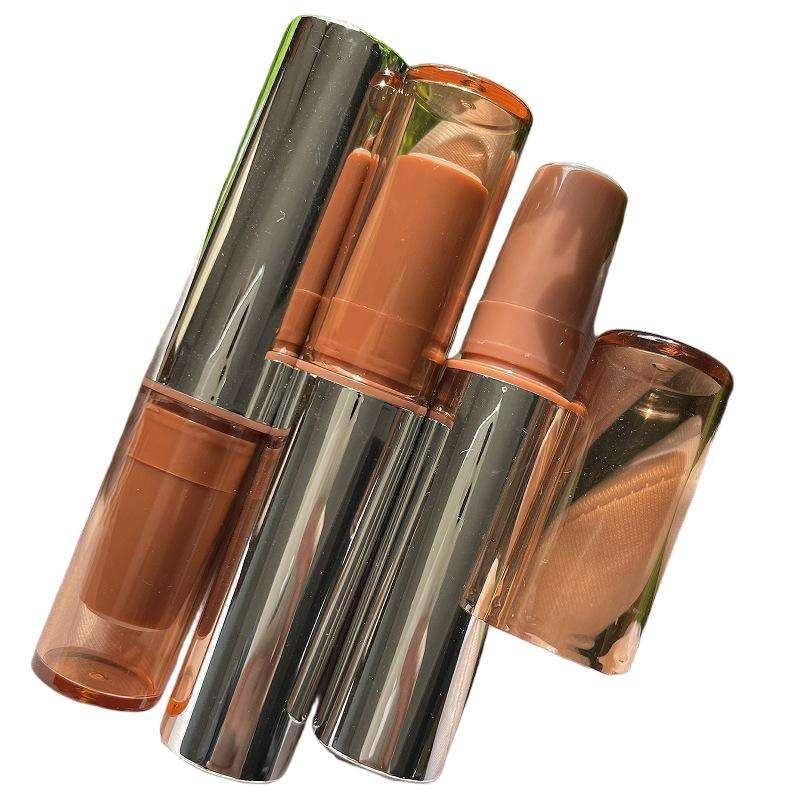
The second, quieter pitfall is treating the refill as an afterthought. A refillable cushion box is a contract with a supply chain: tray, gasket and net have to stay compatible across refill generations, and the seal has to hold on a box opened every day for two years. Decide that at the first drawing, not at the second purchase order. Here is the structure of each compact, part by part, and the rule that picks between them.
Which formula state determines the compact structure?
Cushion boxes carry liquid foundation and BB or CC cream; pressed powder compacts carry solid product. The structure follows from that single sentence. A cushion box needs a sealed inner tray, an elastic net or sponge, and a puff compartment, with a mechanism that controls flow so the cushion does not over-saturate. A pressed powder compact needs a hinge, a clasp and a pan fit that keeps a pressed disc seated. The rule we work to: tell us the formula state — liquid, cream or pressed — and we propose the structure first, then the decoration.
| Formula state | Pack | Critical parts | What goes wrong if mismatched |
|---|---|---|---|
| Liquid foundation, BB or CC cream, tinted moisturizer | Cushion compact | Sealed inner tray, gasket, elastic net, flow control | Leaking, over-saturation, formula drying in the tray |
| Cream or gel-cream | Cushion compact or pump format | Sealed tray or pump valve | Same, plus inconsistent flow |
| Pressed powder: foundation, blush, bronzer, highlighter | Hinged compact | Hinge, clasp, pan fit, mirror | Pan rattle, chipped disc edges, weak press, lid misalignment |
| Loose powder | Jar with sift or brush, not a compact | Sift, brush seat | A compact pan has no place for loose product |
If the formula state is not fixed yet, do not pick the pack yet either. A formula that is liquid today but will be pressed in a second variant needs two packs; a pressed formula that may become a cushion later needs the tray and pan designed so they swap without retooling the shell.
Which components need separate approval before ordering?
A cushion compact has more parts than it looks, and every one of them is doing a job:
- Outer body and lid — the shell the brand designs; on a refillable design it survives across refill generations, so get it right first.
- Inner tray — holds the cushion sponge. On refillable formats the tray is the refill unit, and it is where the gasket lives.
- Seal and gasket — the fitted ring that closes the gap between tray and body. It is the single most important part for leak control, and the one that is invisible in every marketing photo.
- Cushion sponge — the reservoir. Its pore structure decides how much formula it holds and how evenly it releases.
- Elastic net — the fabric over the sponge, and the flow control: it decides how much formula the puff picks up per press, and it is what keeps a liquid from flooding the puff.
- Puff compartment — a pocket in the lid or a separate holder. The puff has to fit, stay seated, and have room for the formula it carries.
- Clasp and closure — snap or screw, with controlled closing force. See the seal section below for why ‘snaps shut’ is not a spec.
Tinted lip products in cushion form use the same gasket, net and flow logic on a smaller tray, which is why the structure logic below applies to lip packaging as much as to face.
The mechanism question on a cushion compact is flow: tray geometry, net tension and closing force together decide whether the cushion saturates evenly or starves at the edges. If it over-delivers, the puff is soaked and product is wasted; if it under-delivers, the user presses harder, the formula comes up unevenly, and the box comes back as ‘does not work’. Both failure modes are design decisions made before the first sample.
Pressed powder compact anatomy: the parts that carry solids
A pressed powder compact has fewer parts, but the tolerances are different:
- Hinge — usually two-part, connecting lid and base. It decides how the box sits open and how the lid closes flat; a loose hinge shows up as lid misalignment after months of use.
- Clasp — snap or magnetic. It has to hold the box shut in a bag full of products, which is a real load, and it has to open with one finger.
- Pan — the seat for the pressed disc. Pan diameter and depth have to match the disc exactly: too shallow and the powder sits proud and chips on the edge; too deep and the disc rattles and the press reads weak.
- Mirror — in the lid, or absent on a two-compartment design. Mirror size is a tooling decision, not a dimension that can be adjusted late.
- Sponge or puff applicator — in a lid pocket on many designs. If the formula is applied with a puff, the pocket has to hold it; if with a sponge, the sponge thickness has to fit the lid travel.
The pressed powder itself is usually pressed by the brand or a contract filler, not by the pack supplier — but the pan spec is the pack supplier’s. The disc’s diameter, thickness and weight have to be decided against the pan, because a disc pressed to the wrong dimension cannot be fixed by a different compact. Agree both specs in one document.
Size, shape and molding: what is standard and what is toolable
Cushion formats run from a 5 g mini through 12 g and 20 g up to full-size compacts, with diameters from roughly 59 mm to 76 mm. Mini formats are the fastest-growing compact size for sampling and travel retail, which is why the 5 g and 12 g trays are most often quoted. Beyond the standard range, the body diameter, height, pan depth and mirror size can all be tooled to your design. The trade is honest: an existing mold in the right size range saves tooling cost and lead time; a custom mold gives you a silhouette nobody else has. Decide before the first drawing, because the answer changes the shell, the tray and the timeline.
Seal and flow: where leak claims come from
On a liquid format the seal is everything. A cushion box that leaks does so at one of three places: the gasket, the closure, or the valve. The working design uses an inner tray with a fitted gasket, a snap or screw closure with controlled closing force, and — on the pump-style formats — a valve that opens only under pressure. ‘Controlled closing force’ means the clasp is not just ‘snaps’: it closes to a force the gasket is designed to compress, so the seal is repeatable across the whole run, not just on the first sample.
On a refillable design the same seal has to hold across repeated opening and closing — every refill generation, every daily use, for the life of the box. That is why a cushion seal is verified by a seal test rather than by looking at the part, and why a sample that passes the seal test on the bench is the only sample worth signing. If the formula is thin, or it carries volatile components, the seal geometry is one of the things adjusted for it at the sampling stage.
Decoration: the lid is the biggest flat surface you get
A compact lid is the largest flat surface in a cosmetics range, which is why it takes the most decoration: silk-screen printing, hot stamping, UV printing, electroplating, 3D embossing, matte or glossy lamination, and pearl or gradient effects in the resin itself. A common premium combination is an electroplated rim with a matte laminated lid and a hot-stamped logo. If the artwork is a full-bleed pattern rather than a logo, UV printing is usually the right route; the full process comparison is on our blog.
Two practical notes on compact color and finish. The mirror, if the design has one, turns the lid from one flat surface into two, and the decoration spec has to say which is which. And the shell color is masterbatch: dosed and blended to a Pantone reference or a physical sample, with a trial sample molded and compared against the reference before the color is approved for production — because resin color shifts under different lighting and wall thickness, and approving a flat swatch alone is not enough on a molded part.
How Fengyuanbeauty approaches this
Fengyuanbeauty is a Chinese makeup packaging manufacturer working OEM and ODM direct from the factory. The working rule is the one from the top of this post: send the formula state — liquid, cream or pressed — and we propose the structure first, then the decoration. Body diameter, height, pan depth and mirror size are all toolable, and an existing mold in the right size range saves tooling cost and lead time. The current shells are in our face makeup packaging range, and we have built compacts and cushion boxes with 200+ clients.
Confirm sample availability, charges, dispatch timing, production lead time, payment and inspection scope in the current written quotation. These depend on the model, customization, quantity and destination. Keep the approved sample and final specification with the order records.
Send the formula state and the design — JPG, AI, CDR or PDF — to vincentyan@fymakeup.com or on WhatsApp +8618638168002, and request free stock samples of the structure you are shortlisting. We reply within 24 hours (working days, GMT+8).
Which evidence should support the final packaging decision?
Use the chosen model’s drawing, component list and approved sample as the project record. For the safety-assessment context of packaging in contact with cosmetics, consult the EU guidance on the cosmetic product safety report. This regulatory reference is not a test result or approval for a particular Fengyuan model.
What is the next step for your packaging project?
Browse the relevant packaging collection, review customization options, and request a model-specific sample. Send the model reference, intended formula or format, quantity and any open questions so the response can address your actual order.
Publisher: Fengyuan · Existing article credit: Fengyuanbeauty · Content updated 18 November 2026. Product and company details should be checked against the company profile and current written specification; sample checks are project-specific.