
Choose AS, PETG or acrylic packaging by the exact resin grade, component design, appearance requirements and results with your intended formula. Material names alone cannot establish a universal winner for clarity, impact resistance, cost or compatibility. Compare model-specific samples before approving the material and decoration combination.
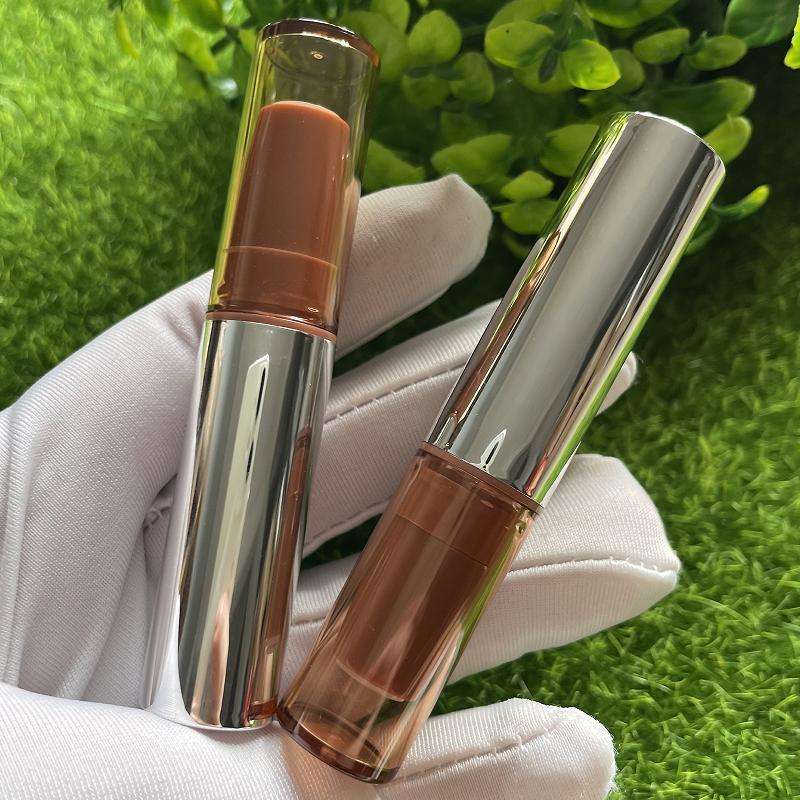
Compare the proposed resin grade and component design with your intended formula and handling conditions. General material descriptions are starting points for sample selection, not proof of performance.
Which material properties should buyers compare?
Read the table the way a buyer should: no row wins everywhere. The job is to find which column your product actually lives in — clarity for a shade-forward gloss, impact for a long-haul route with rough last-mile handling, cost for a high-velocity retail SKU, finish for a brand-identity piece. Clear bodies appear across lip packaging and squeeze tubes wherever the formula or the shelf look is the point of the design.
| Decision | Evidence to request |
|---|---|
| Material identity | Component-level resin grade and supplier specification |
| Appearance | Model-specific reference with the intended color, finish and formula |
| Handling | Agreed method and results for the finished component or assembly |
| Formula contact | Evaluation of the actual formula and contact components |
| Commercial scope | Quote identifying quantity, decoration, packing and delivery assumptions |
Two notes on reading it. ‘Molding cost’ is the per-piece molding and yield cost, not the resin price — the difference is covered below. And ‘no plating on the clear part’ is not a limitation of the supplier; it is a property of the finish: an opaque metal layer would bury the clarity the body is there to show.
How should formula compatibility and transit requirements be evaluated?
Compare clarity on samples with the actual grade, color, wall design and intended decoration. Ask which measurement or reference the supplier is using when describing light transmission or haze. Evaluate the appearance with the intended formula inside the pack, because an empty clear component and the filled package can present differently. Avoid ranking a whole resin family from a single photograph or an unspecified sample.
Glass is the reference — nothing the plastics do looks like it when the formula is a deep, highly transparent shade. If the color of the formula is the selling point, a sheer lip oil or a water-clear gloss, that is the single strongest argument for AS or glass: the body becomes part of the shade story, and a hazy body hides a color that is the whole product.
Toughness: what actually breaks in transit
For clear plastics the failure mode is not slow wear; it is one impact. A dropped case, a forklift nick, a pallet shift — and the part fails at a corner, not a face, because corners carry the stress. AS is the stiffest of the three clear molding resins and the least forgiving: a part with a sharp edge that survives in PETG will crack in AS. If your carton is packed tight and your route includes rough last-mile handling, the resin call is partly a logistics call.
Agree the handling and transit conditions relevant to the finished package and assess the candidate component design under those conditions. Impact behavior depends on the specific grade, geometry, assembly and test method. Glass and molded plastics also create different packing and handling questions; neither a material label nor a general comparison establishes a model-specific result.
Formula resistance: oils, alcohols and heavy pigment loads
This is where most ‘clear’ decisions actually break. The formula in the tube is a solvent environment, not just a liquid. Oil-based gloss, alcohol-based liner and heavily pigmented formulas each attack the polymer differently, and the same material ages differently against each one. Send the formula chemistry at the sampling stage, not after the first batch of claims.
- Oil-based and silicone-based formulas: the failure mode is swelling and stress-cracking over time. AS is the weakest of the clear trio for sustained oil contact; PETG is noticeably more resistant, and that resistance is a large part of why it became the default for lip oil and thick gloss.
- Alcohol-based and solvent-heavy formulas: volatile solvents are the harsher environment. If your formula carries a meaningful alcohol load, the material call and the seal geometry both change, and both should be decided at sampling.
- Highly pigmented, dense formulas: pigment load is less a chemical attack and more a visual test — a hazy body hides the texture of a dense formula badly. Here clarity and haze matter more than chemical resistance, which pushes the call back toward AS or glass.
Glass is immune to all of it. That is the quiet argument for the premium end: the formula can never attack the container, at any shelf life, in any climate.
Where the real cost sits
Resin unit price is a small part of the total. The cost stack that actually differs between the four materials:
- Molding yield. PETG molds cleanly at standard wall thicknesses. Thin-wall AS needs tighter control. Acrylic parts are either thick-walled, which adds resin per piece, or machined, which adds time. Yield differences usually matter more than the resin price.
- Wall thickness. A clear body that must look uniform is a wall-thickness spec, and every extra fraction of a millimeter of section is resin, cost, and clarity risk from a visible section line.
- Cap pairing. Most clear bodies ship with a contrasting cap, usually ABS, because that is the part that takes plating and decoration. Budget the pair, not the body alone — the body-and-cap pair is what the consumer actually sees.
- Finish. A matte lamination, a UV coat or a printed logo on a clear body is an added step on top of molding. Put it in the spec from day one, not as an afterthought on the artwork.
The cheapest option on the quote is not always the cheapest in the field. A clear body that hazes, swells or cracks is a replacement, a claim and a re-run — and on a clear part the defect is visible the day it happens, so it ships with the first order, not the third.
Finishes on clear bodies: electroplating, lamination and masterbatch
It is worth being precise here, because it is where quotes go off. Electroplating — gold, silver or rose gold — is an opaque metallic finish. It is used on caps, decorative rings and solid parts, usually ABS, because plating a clear body buries the clarity that is the reason the body exists. The typical premium clear build is a clear AS or PETG body with an electroplated ABS cap: the clarity and the metal read do not fight.
If the finish is pearlescent, iridescent or marbled, the correct route is masterbatch in the resin itself. The color runs through the material, so it cannot peel, chip or fade the way a surface finish can — and on a clear part a surface defect is a total failure, not a cosmetic one. For a full-color print or a large-area logo, UV printing is the route; for small text and shade numbers on a narrow body, silk screen reads best.
On clear materials, the surface you see is the surface of the mold plus the resin. Sample approval on a clear part is not a look at the color — it is a look at haze, section line and mold flow marks, under angled light, with the formula inside if you have it.
How Fengyuanbeauty approaches this
Fengyuanbeauty is a Chinese makeup packaging manufacturer, working OEM and ODM direct from the factory, and the materials above are the resins we mold: PP, PE, AS, ABS, PETG, acrylic and glass, including recycled ABS, PP and PETG where the design allows. Because the material call is made by the people who mold the part, we propose the body-and-cap pairing before the decoration — the material decision and the finish decision are one decision, and the formula chemistry decides which one. We have made this call with 200+ clients, we sign NDA on request, and your exclusive items are not resold to anyone else. The working process is on our OEM/ODM page.
Confirm sample availability, charges, dispatch timing, production lead time, payment and inspection scope in the current written quotation. These depend on the model, customization, quantity and destination. Keep the approved sample and final specification with the order records.
Send the formula and the design — JPG, AI, CDR or PDF — to vincentyan@fymakeup.com or on WhatsApp +8618638168002, and request free stock samples in the clear body you are shortlisting. We reply within 24 hours (working days, GMT+8).
Which evidence should support the final packaging decision?
Use the chosen model’s drawing, component list and approved sample as the project record. For the safety-assessment context of packaging in contact with cosmetics, consult the EU guidance on the cosmetic product safety report. This regulatory reference is not a test result or approval for a particular Fengyuan model.
What is the next step for your packaging project?
Browse the relevant packaging collection, review customization options, and request a model-specific sample. Send the model reference, intended formula or format, quantity and any open questions so the response can address your actual order.
Publisher: Fengyuan · Existing article credit: Fengyuanbeauty · Content updated 18 November 2026. Product and company details should be checked against the company profile and current written specification; sample checks are project-specific.