
Start packaging troubleshooting by recording the model, batch, formula, filling conditions and the observed failure. Reproduce the issue on a representative sample, then separate possible component-fit, seal, formula and handling causes before changing the specification. A photograph or the statement “it leaks” cannot identify the cause alone.
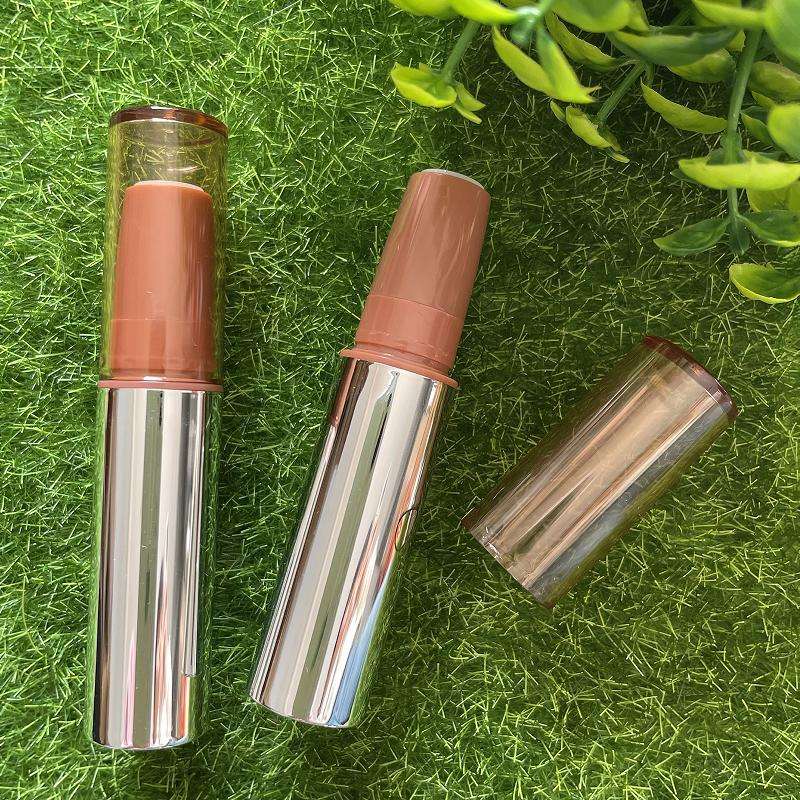
Almost every cosmetic packaging troubleshooting case falls into one of four buckets: structure, seal, formula or process. This cosmetic packaging troubleshooting guide walks the three most common complaints — leaking liquid, pumps or wipers that will not dispense, and print that fades or scratches — and gives the decision tree to locate the cause first, then the exact questions to ask the supplier. Work in that order and you stop paying for sampling rounds that investigate the wrong layer.
How can buyers separate structure, seal, formula and handling causes?
| Signal | Likely cause | First question to ask |
|---|---|---|
| Leak at the nozzle, wet tip, product drying out inside the pack | Seal | Where does the product escape, and does it appear in sampling, in transit or in retail? |
| Split seam, cracked cap, tube will not close on itself | Structure | Does the same failure happen in the sample and in multiple production batches? |
| Pump worked in sampling, stopped after the formula sat | Formula | Was the pump validated against our actual formula viscosity, or only a test medium? |
| Print fails adhesion in one batch, not the next | Process | What did the pre-shipment inspection record show for print adhesion on that batch? |
Rule of thumb: a defect in the sample and repeating in production is structure or material; in transit it is seal; after filling or weeks of use it is formula; in one production batch and not the next it is process. Two or more batches failing the same way turns a complaint into a systemic problem — that is when the supplier owns the fix.
Which checks help investigate leakage by packaging format?
Lip tubes, lip oil and gloss tubes
Sealing on a lip tube is a structure question, not a material question: an inner stopper or sealing gasket at the nozzle, a cap tightened against that seal in a controlled assembly step, and a seal test before the tube leaves the line. If your formula is thin or contains volatile solvents, the seal geometry has to be adjusted for it, and that happens at the sampling stage. Ask whether the supplier ran a seal test on the sampled tube and what the result was. A wet nozzle after shipping is almost always the seal, and it is fixable without changing the material.
Squeeze tubes
A squeeze tube has three decision points: the head-to-body weld, the cap-to-head seal, and the body wall thickness. Flip-top caps use an inner plug that seals on the nozzle bore; screw caps use a gasket. Wall thickness consistency comes from cavity accuracy on the mould, which keeps the weld sound and stops the tube splitting under pressure. A split seam is structure; seepage at the cap line is the seal. Ask which of the three their inspection covers, and whether a seal test is run before packing — “we check by eye” is not a seal test.
Cushion and pressed compacts
On a liquid format the seal is everything: an inner tray with a fitted gasket, a snap or screw closure with controlled closing force, and, for pump-style formats, a valve that only opens under pressure. If a cushion compact leaks from the tray seam, the gasket or the closing force is at fault; if it leaks only under hard puff pressure, the valve setting is. Refillable designs are the hardest case, because the same seal has to hold across repeated opening and closing — a seal test matters there, not a visual check.
For all three, the diagnostic question is the same: where exactly does the product escape, and when did it first appear? That selects the fix; the supplier’s seal test result is the evidence.
Pumps, wipers and products that will not dispense
“The pump will not dispense” is usually two different problems wearing the same description.
The wiper is the dose control on eye products
On mascara and eyeliner, the component that decides how much product lands on the brush is the wiper — a flexible insert at the neck that strips excess product off the brush as it is withdrawn. Its inner diameter and material decide whether the brush comes out loaded or dry, and it has to be adjusted against your brush geometry and formula viscosity, not chosen for looks. A brush that comes out dry in sampling but loads in retail is almost always a wiper mismatch. Ask: what wiper material and inner diameter is fitted, was it checked against our brush geometry, and is wiper function part of the pre-shipment inspection? Our eye packaging line treats wiper function as a checked item, not an assumption.
Actual pump and squeeze formats
If a pump dispenses in sampling and stops after the formula has been sitting, the cause is almost always the formula — viscosity, solids content, or a component that gels in the pump chamber — not the pump. If it never dispenses, even against a test medium, the pump model is wrong for the format. Validate the pump against your actual formula, or one with matching viscosity, during sampling, and agree a function test before mass production. Ask whether they have run your formula through the pump, what the dispensed volume per press was, and whether that number is in the specification as the acceptance criterion. A pump that has never met your formula is still a sample, not a component.
Print that fades, scratches or peels
Decoration durability has one distinction that resolves most complaints: is the effect in the resin or on the surface? Pearl, iridescent and marble effects added as masterbatch run through the material, so they do not peel, chip or fade the way a surface finish can. Surface decorations — silk-screen, pad, offset or UV printing, hot stamping, electroplating, lamination, soft-touch — all carry some risk.
Match the process to the job first: silk screen is the most legible for small text on a 16–22 mm tube body, pad printing handles curved surfaces, offset suits larger tube areas, UV printing covers full-colour artwork, and hot stamping reads metallic but needs a simpler shape. Then apply the real risk factor, which is the formula: alcohol-based glosses and high-silicone formulas are harder on surface decoration than water-based ones, so the adhesion test has to run against the actual formula, not water. The right pre-production question is what adhesion test will you run on the printed sample, and will the result be written into the specification? If yes, a failed print is a process problem the supplier owns; if no, the buyer owns the complaint.
Colour that does not hold between batches
Shade drift is usually a material or process issue, not a decoration issue. Colour for moulded parts comes from masterbatch, dosed to your Pantone reference or physical sample, and a trial sample is moulded and compared before the colour is approved — because resin colour shifts under different lighting and at different wall thicknesses, a flat swatch alone is not an approval. If your shade drifts between batches, the likely causes are resin lot variation or dosing drift. Ask how colour is held across resin lots, whether each production batch is checked against the approved sample, and what tolerance the supplier works to. A pre-shipment inspection that includes shade consistency against the approved sample is what catches drift before the container ships, and the inspection standard should name the shade check explicitly in the specification.
The questions to send the supplier
Every question below is answerable with evidence, not an opinion.
| Complaint | Likely cause | Questions to send |
|---|---|---|
| Lip tube leaking at the nozzle after shipping | Seal | What is the seal configuration (inner stopper or gasket, cap torque), was a seal test run before packing, and can it be adjusted for a thin or volatile formula? |
| Squeeze tube splitting at the seam when squeezed | Structure | What is the body wall thickness and how is cavity accuracy controlled? What does the pre-shipment record show for the affected batch? |
| Cushion compact leaking from the tray | Seal | What is the gasket material and the controlled closing force? Is the seal tested across repeated open-close cycles on refillable designs? |
| Brush comes out dry or over-loaded | Structure (wiper) | What wiper material and inner diameter is fitted, and has it been adjusted against our brush geometry and formula viscosity? |
| Pump dispenses in sampling, stops in use | Formula | Was the pump validated against our formula viscosity, and what dispensed volume per press is in the specification? |
| Print peels or scratches at the cap ring | Process | What adhesion test was run on the printed sample against the actual formula, and is the result in the specification? |
| Shade drift between batches | Process (masterbatch or resin lot) | How is colour held across resin lots, and is each batch checked against the approved sample with a stated tolerance? |
If the same defect appears in more than one batch, stop treating it as an incident and treat it as a process problem. The supplier’s inspection records, seal test data and colour check results become the evidence, and the follow-up question is what changed between the passing batch and the failing one. If the supplier cannot answer that, the process is not controlled — say so in the specification before the next batch is released. Our FAQ covers the sampling and inspection steps where most of these answers should first appear.
How Fengyuanbeauty approaches this
Every batch we ship is fully inspected before it is packed, covering seal integrity, thread fit, print adhesion and shade consistency against the approved sample, with more than 20 inspectors on the line. The specific inspection standard and acceptance level for your order are agreed in the specification, so a defect like the ones above is measured against a number you signed, not against an impression. That is the difference between a troubleshooting conversation and a dispute.
When a defect does reach us, the first ask is the same as in this guide: where does it appear, what does it look like, and when did it start. Bring a failed sample with the report if you can; a photographed leak pattern is worth more than a paragraph of description.
Confirm sample availability, charges, dispatch timing, production lead time, payment and inspection scope in the current written quotation. These depend on the model, customization, quantity and destination. Keep the approved sample and final specification with the order records.
Which evidence should support the final packaging decision?
Use the chosen model’s drawing, component list and approved sample as the project record. For the safety-assessment context of packaging in contact with cosmetics, consult the EU guidance on the cosmetic product safety report. This regulatory reference is not a test result or approval for a particular Fengyuan model.
What is the next step for your packaging project?
Browse the relevant packaging collection, review customization options, and request a model-specific sample. Send the model reference, intended formula or format, quantity and any open questions so the response can address your actual order.
Publisher: Fengyuan · Existing article credit: Fengyuanbeauty · Content updated 18 November 2026. Product and company details should be checked against the company profile and current written specification; sample checks are project-specific.