
A useful cosmetic packaging RFQ identifies the model, formula context, capacity, materials, quantity, decoration, packing and delivery scope. Supply drawings or references where available, mark unresolved requirements clearly, and ask suppliers to state assumptions so quotations can be compared on the same basis.
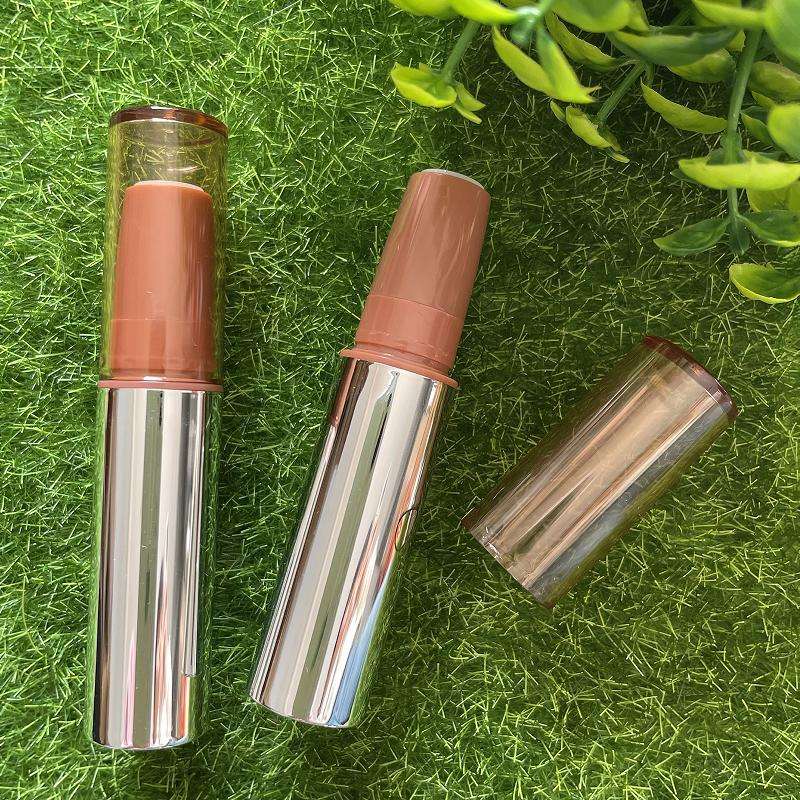
Why do incomplete packaging briefs produce incomparable quotes?
A quote from a cosmetic packaging supplier is only as accurate as the inputs it is built from, and almost every cost variable in cosmetic packaging is one the buyer controls. Material choice changes resin cost; the decoration stack changes production steps; the quantity tier changes unit price more than most buyers expect; the destination changes which compliance documents must be assembled before the container ships. If any of those is missing, the cosmetic packaging supplier quotes the middle of the range and hopes, or asks — both slow you down, and both make the first quote look wrong when it was built on a guess. The fix is a structured email, with the fields below.
Which fields should a cosmetic packaging RFQ contain?
Work through the list top to bottom. Each field is one line in the template, and each removes a specific guessing problem from the supplier’s side.
1. Model number or reference
Quoting an existing catalogue design? Give the model number or attach the product page link so both sides look at the same piece. Custom design? Attach a specification sheet with dimensions, capacity and target silhouette. The field exists to stop the supplier quoting a lookalike — several tube families share a capacity but differ in wall thickness, head design and print area.
2. Material and capacity
State the material — PP, PE, AS, ABS, PETG, acrylic, glass, or recycled ABS, PP or PETG — the capacity in millilitres, and the formula type. The formula matters because oil-based, alcohol-based and highly pigmented formulas put different demands on the same material, and a seal or wiper geometry chosen for one can fail with another. The millilitre figure on the pack and the gram figure in your fill specification will not match exactly because formula density varies; give the target fill weight and the supplier will confirm it with a filling test at sampling.
3. Quantity, in pieces
State the quantity per model in pieces, and the expected annual volume if you plan to scale — unit price scales with the quantity tier, so a quote at 12,000 pieces per model is not a quote at 50,000. The minimum order is 12,000 pieces per model; if your first run is smaller, say so in the RFQ, because the answer is usually how to size a first run sensibly.
4. Target unit price
Give a range per quantity tier rather than a single number, and say which trade terms it is against — FOB, EXW or delivered — with your destination port. A target price tells the supplier where you want to land. If you do not have one yet, say so; a comparable number with named terms beats a low number with unnamed ones.
5. The lead time you need
State the date you need the approval sample and the date you need goods at your warehouse. Custom sampling typically runs about 7 days and mass production typically 25–35 days after order confirmation, and neither is a promise about your calendar — transit time is yours to add. A lead time given as a target date, not a wish, lets the supplier say honestly whether the timeline works before you sign anything. If the date is fixed by a retail launch, say so in one line.
6. Printing and surface treatment
List the process per area rather than one word for the whole pack: silk-screen, pad, offset or UV printing for text; hot stamping or electroplating for metallic looks; lamination or soft-touch for the body; pearl and metallic masterbatch or gradient for effects in the resin. Add your Pantone references and artwork files in JPG, AI, CDR or PDF — or state “no decoration, single colour” explicitly, because an unspecified surface gets priced as the expensive one. Colour on a moulded part deserves its own line: say whether you need a Pantone match, and expect confirmation on a moulded trial sample — a flat swatch alone is not an approval.
7. Destination country, city or port
The destination determines which compliance documentation the supplier must assemble: FDA food-contact test reports for the US market, EU 10/2011 test reports for Europe, REACH statements where relevant, and for EU brands a material declaration aligned with the PPWR (Regulation (EU) 2025/40) packaging file. Tariff rates are not part of the supplier’s quote — they are subject to the import country’s official tariff schedule and your customs broker — but the destination still belongs in the RFQ, because it decides the trade terms and the document set.
8. Contact details that reach you fast
Email plus a WhatsApp number, and your working hours and time zone in one line — RFQ back-and-forth moves on messaging, not email threads, and your time zone makes a 24-hour reply commitment work on both sides.
9. The sample request, as its own line
Confirm sample availability, charges, dispatch timing, production lead time, payment and inspection scope in the current written quotation. These depend on the model, customization, quantity and destination. Keep the approved sample and final specification with the order records.
Compliance and documentation: say what your market needs
If a project calls for recycled material or a certified supply chain, request the applicable certificate and transaction evidence, identify the holder and scope, and confirm that the proposed component and order are covered. Do not infer certification from a logo, a resin name or a general company statement.
How to present the request, and what to do with the reply
Keep the RFQ to one email or one form submission, fields in a numbered block, sample line at the end — long prose paragraphs are where quantities and Pantone codes go to be lost. When the quote comes back, check that it mirrors your fields: price per model, material, decoration, quantity tier, trade terms, lead time. Then ask the four questions that separate a firm quote from a starting number: does the price hold at the stated quantity? Does the quoted material match the specification? What is the sampling timeline and the production timeline from order confirmation? Which documents are included in the quoted price? If the first quote is far from target, pick which field to move first — quantity, decoration, material or destination — and restate it. A specific change produces a specific number; a vague ask produces a vague number. The stages after the quote, from approval sample to pre-shipment inspection, are walked through on our OEM and ODM page.
A template you can copy
Replace the bracketed fields and send. Everything in it is a fact a supplier can price; nothing is an opinion.
Subject: RFQ — [model number or “custom design”] — [quantity] pcs — [destination]
- Model: [model number / product page link / attached spec sheet]
- Material & capacity: [PP / PE / AS / ABS / PETG / acrylic / glass / recycled] — [ml] — formula: [oil-based / alcohol-based / water-based / silicone]
- Quantity: [first order] pcs, expected [annual] pcs per year
- Target unit price: [range] [currency] per piece at [quantity tier], against [FOB / EXW / delivered]
- Lead time: approval sample by [date]; goods at [city or port] by [date]
- Printing & surface treatment: [process per area] — Pantone [codes] — artwork attached (JPG / AI / CDR / PDF) / no decoration, single colour
- Destination: [country, city or port]
- Compliance: [FDA food-contact / EU 10/2011 / REACH statements / PPWR material declaration / RCS, GRS or ISCC for recycled content]
- Contact: [email] — WhatsApp [number] — working hours [time zone]
- Sample: [stock sample of model X / custom colour and printing sample], needed by [date]
Especially for EU brands, add: “Please align the material declaration with our PPWR packaging file and confirm which documents are included in the quoted price.” It saves a documentation round later.
How Fengyuanbeauty approaches this
Confirm sample availability, charges, dispatch timing, production lead time, payment and inspection scope in the current written quotation. These depend on the model, customization, quantity and destination. Keep the approved sample and final specification with the order records.
Send your first quote request with the ten fields filled in, and the first number back should be one you can build a decision on.
Confirm sample availability, charges, dispatch timing, production lead time, payment and inspection scope in the current written quotation. These depend on the model, customization, quantity and destination. Keep the approved sample and final specification with the order records.
Which evidence should support the final packaging decision?
Use the chosen model’s drawing, component list and approved sample as the project record. For the safety-assessment context of packaging in contact with cosmetics, consult the EU guidance on the cosmetic product safety report. This regulatory reference is not a test result or approval for a particular Fengyuan model.
What is the next step for your packaging project?
Browse the relevant packaging collection, review customization options, and request a model-specific sample. Send the model reference, intended formula or format, quantity and any open questions so the response can address your actual order.
Publisher: Fengyuan · Existing article credit: Fengyuanbeauty · Content updated 18 November 2026. Product and company details should be checked against the company profile and current written specification; sample checks are project-specific.