
A lip gloss tube is a packaging assembly that commonly includes a body, cap, applicator stem and tip, and a wiper or stopper. These parts must work together with the formula and filling process. Identify the model and component arrangement before discussing capacity, customization or replacement parts.
This guide focuses on a wand-style package. Squeeze tubes and other dispensing formats have different constructions. Even within wand-style packaging, component names and designs can vary, so use the supplier’s drawing and sample to identify the parts.
Which parts make up a lip gloss tube?
| Part | What it refers to | What a buyer should confirm |
|---|---|---|
| Body or container | The part that holds the formula | Capacity definition, dimensions, opening, material specification and decoration area |
| Cap | The closure and handle for the wand assembly | Closure fit, appearance, assembly details and compatibility with the selected body |
| Wiper or neck insert | An insert at the opening that removes excess formula from the wand during withdrawal | Insert design, fit with the opening and wand, product-contact material and intended dosing behavior |
| Stem or wand rod | The part connecting the cap assembly to the applicator tip | Length, cross-section, attachment details and material specification |
| Applicator tip | The part used to pick up and apply the formula | Shape, dimensions, material or surface construction, attachment and performance with the intended formula |
These descriptions identify common functions; they are not a bill of materials for every model. Ask the supplier to mark the exact components on a drawing or photograph of the package being quoted.
What should buyers check on the body and closure?
A photograph of the closed package does not show the entire wand assembly. Ask for views of the cap removed and the complete wand, together with a component drawing where available. Confirm whether the quoted cap includes the stem and tip, and whether any decorative outer cap is a separate part.
Describe the applicator by more than a marketing name. Ask which material and surface construction are supplied for the chosen tip. Do not assume that a soft-looking tip is a particular foam, fiber or bristle material. Keep the approved component description with the sample identifier.
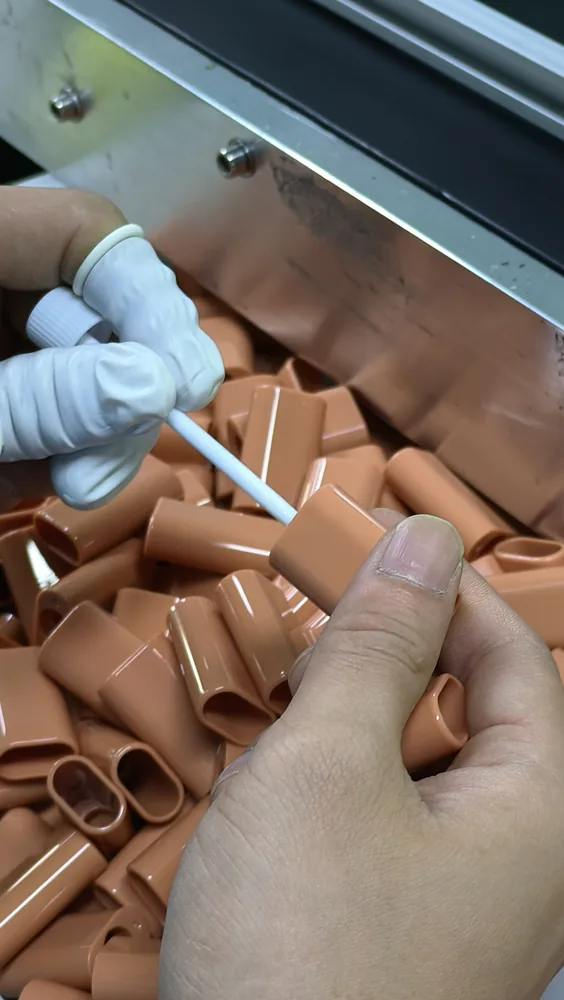
What does the wiper do?
In a wand-style package, the wiper interacts with the wand as it passes through the opening. Its fit and shape influence how much formula remains on the applicator when it is withdrawn. The body, insert, stem, tip and formula therefore need to be considered together.
Ask the supplier to identify the insert and explain how it is retained. During sample evaluation, have your formulation and filling teams review withdrawal, pickup, application and closure using the intended formula and an agreed procedure. Record observations rather than assuming that a different wand will work with an unchanged insert.
Confirm capacity and dimensions separately
A container’s stated capacity does not describe every dimension needed for sourcing. Ask what the capacity figure represents and how your planned fill quantity will be checked. Request external dimensions and the relevant opening and component dimensions from the supplier.
For a broader comparison of capacities and body shapes, see our lip gloss tube sizes guide. Use the actual drawing and approved sample for purchasing decisions; do not estimate internal fit from an exterior product photograph.
Request materials by component
The body material alone does not describe the cap, insert, stem or tip. Ask for a component-level specification that distinguishes product-contact parts from decorative parts. Request available documentation for the exact configuration, and ask which changes to color, finish or components would require the specification or evaluation to be reviewed.
A material name or document for another model does not establish compatibility with your formula. Define the evaluation with the people responsible for formulation, filling and quality. Our quality control page can help you prepare questions about inspection scope and acceptance criteria; it does not replace a model-specific agreement.
What should be included in a sample request?
Send a reference drawing or photograph, intended fill quantity, formula information, preferred body and cap appearance, applicator requirements and destination. State whether you need a plain structural sample, a decorated approval sample, or both. Ask about sample charges, shipping and availability for the selected configuration.
Use our sample request page to start that discussion. Keep a record of the sample code, date, component list and evaluation results. If a component changes, identify the revision before relying on earlier observations. For an existing issue, the packaging troubleshooting guide provides a separate starting point for recording symptoms.
A component checklist for comparing quotations
Before accepting a quotation, ask:
- Does the price cover the body, cap, insert, stem and applicator, or only selected parts?
- Are the model number, component materials and drawing revision identified?
- Are nominal capacity, intended fill quantity and dimensions clearly distinguished?
- Does the sample represent the quoted component combination and decoration?
- Which assembly, packing, sample or development charges are included?
- What minimum order, schedule assumptions and approval steps apply to this configuration?
For branding or development requirements, review the OEM and ODM packaging process. For the wider supplier-selection process, use our lip gloss tube supplier checklist. These steps keep a component discussion connected to a complete purchasing specification.
Start with a clearly identified package
Browse our lip packaging category and identify the model you want to discuss. Request a component drawing and samples, then confirm the complete body-and-wand configuration before approving production. Model-specific materials, commercial terms and evaluation results should be confirmed for your project rather than inferred from a general package description.
Which evidence should support the final packaging decision?
Use the chosen model’s drawing, component list and approved sample as the project record. For the safety-assessment context of packaging in contact with cosmetics, consult the EU guidance on the cosmetic product safety report. This regulatory reference is not a test result or approval for a particular Fengyuan model.
What is the next step for your packaging project?
Browse the relevant packaging collection, review customization options, and request a model-specific sample. Send the model reference, intended formula or format, quantity and any open questions so the response can address your actual order.
Publisher: Fengyuan · Existing article credit: Fengyuanbeauty · Content updated 18 November 2026. Product and company details should be checked against the company profile and current written specification; sample checks are project-specific.